Academic Half Days (AHD)
FEV1/FVC ratio which is normal to increase with normal DLCO refers to which disease ?
-
Kyphoscoliosis
How to stop a patient from smoking ?
What is CURB 65 ?
What does the CAT Score indicate ?
-
The COPD Assessment Test (CAT) is an 8-question questionnaire that measures how much COPD affects your daily life. Scores range from 0 to 40, where higher scores indicate a more severe impact on your health.
COPD drugs
LAMA trade name:
-
Spiriva HandiHaler / Spiriva Respimat (tiotropium)
-
Incruse Ellipta (umeclidinium)
-
Tudorza Pressair (aclidinium)
-
Yupelri (revefenacin)
LABA trade name
-
Advair (fluticasone/salmeterol)
-
Symbicort (budesonide/formoterol)
-
Breo Ellipta (fluticasone/vilanterol)
-
Dulera (mometasone/formoterol)
LAMA + LABA trade names
-
Anoro Ellipta (umeclidinium/vilanterol)
-
Stiolto Respimat (tiotropium/olodaterol)
-
Bevespi Aerosphere (glycopyrrolate/formoterol)
-
Duaklir Pressair (aclidinium/formoterol)
-
Utibron Neohaler (indacaterol/glycopyrrolate)
Single-Inhaler Triple Therapies for COPD
-
Trelegy Ellipta
-
Medications: Fluticasone furoate (ICS), umeclidinium (LAMA), and vilanterol (LABA).
-
Frequency: Once daily.
-
Breztri Aerosphere
-
Medications: Budesonide (ICS), glycopyrrolate (LAMA), and formoterol fumarate (LABA).
-
Frequency: Twice daily.
What is the new test for determining whether to hospitalise a patient or not ?
-
PSI (pneumonia severity index)
-
Risk Class I & II: Low risk (0-70 points); usually treated as an outpatient.
-
Risk Class III: Medium risk (71-90 points); short hospital stay for observation.
-
Risk Class IV & V: High risk (91+ points); hospital admission. [1]
Pulmonary Embolism Severity Index (PESI)
-
Class III to V (Score ≥ 86) = Instable
-
Class I to II (Score ≤ 85) = Stable
How to know if someone will get admitted into the hospital ?
-
Anyone who is taking a medrol
What is the recovery period for a patient with COPD ?
-
7 to 10 days
What are some pulmonary rehab for the COPD patients ?
-
Incentive spirometry
Academic Half day part 2 Arrhythmia
What supraventricular tachycardias causes narrow QRS complexes ?
-
A narrow QRS complex is considered supraventricular because the electrical impulse originates above the heart's ventricles (the sinoatrial node, atria, or AV node). Because the signal travels down the heart's normal, rapid "superhighway" (the His-Purkinje system), both ventricles are activated simultaneously, resulting in a swift, synchronized squeeze.
What ventricular tachycardias cause wide QRS complexes ?
-
SA --> AV --> His bundle --> bundle branches --> purkunje --> ventricle
-
The Purkinje system is not designed to rapidly collect impulses from ventricular muscle and redistribute them everywhere.
-
Its anatomy and physiology are optimized for one-way delivery (Purkinje → myocardium), not for reverse activation from myocardium → Purkinje.
What are examples of wide complex QRS ?
-
Your Said = TDP, VFIB, VT
What is AFIb with aberrancy
-
MS SAID = Afib with aberrancy = Aberrancy (noun, plural: aberrancies) is the state or condition of deviating from what is normal, usual, or expected. The term is used broadly across several fields to describe an abnormality or deviation. [1, 2, 3]
-
AF with aberrancy (wide QRS) = Originate in the atria.Pass through the AV node. However, one of the bundle branches (usually the right bundle branch) is temporarily or permanently unable to conduct. As a result: The impulse travels normally down the unblocked bundle branch. The ventricle on that side depolarizes first. The impulse then spreads cell-to-cell through the myocardium to activate the opposite ventricle. Cell-to-cell conduction is much slower than conduction through the His-Purkinje fibers. ➡️ Therefore, ventricular depolarization takes longer, producing a wide QRS complex (≥120 ms).
What is the dosage of Amiodarone ?
-
Amiodarone 150 mg IV over 10 minutes
-
Then:
-
1 mg/min infusion for 6 hours (usually 360 mg)
-
Then 0.5 mg/min for 18 hours (usually 540 mg)
-
Step 1: 150 mg IV over 10 minutes = "loading dose"
-
Step 2: 1 mg/min for 6 hours = high maintenance phase
What are the causes of brady cardia ?
-
Sick sinus syndrome = The SA node becomes fibrotic/degenerative, often due to aging, ischemic disease, or medications that suppress conduction
08/31 Psychiatry for the internist
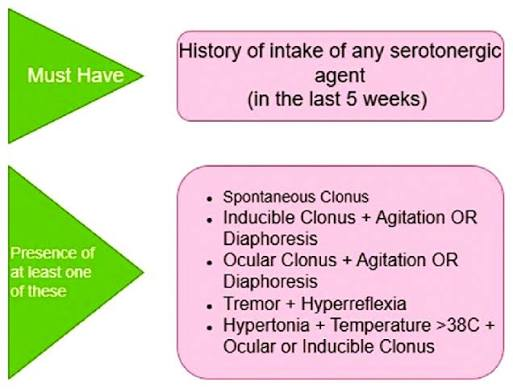
What is the hunter criteria ?
What is the generic name of the drug Geodon ?
-
Zaprisodone
What is PHQ2?
-
Feel lost of interest
-
Depressed Mood
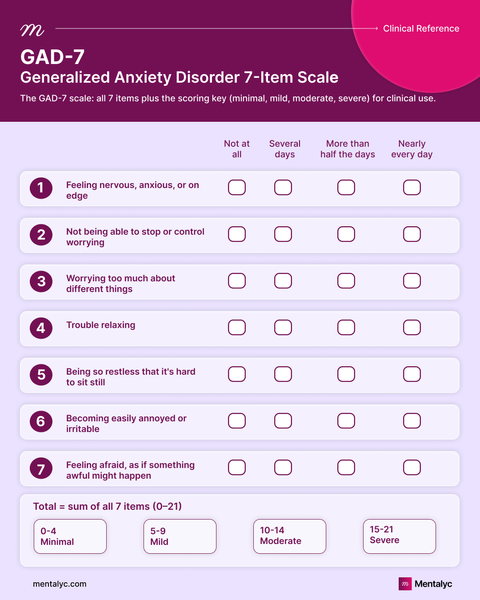
What is the GAD 7 criteria ?
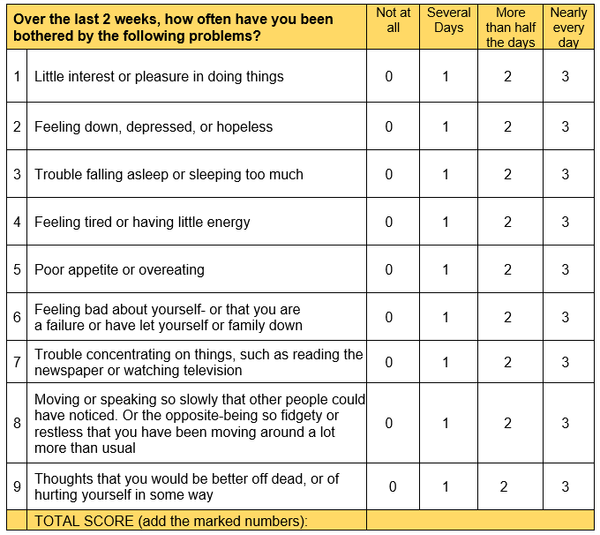
What is the PHQ9 Score ?